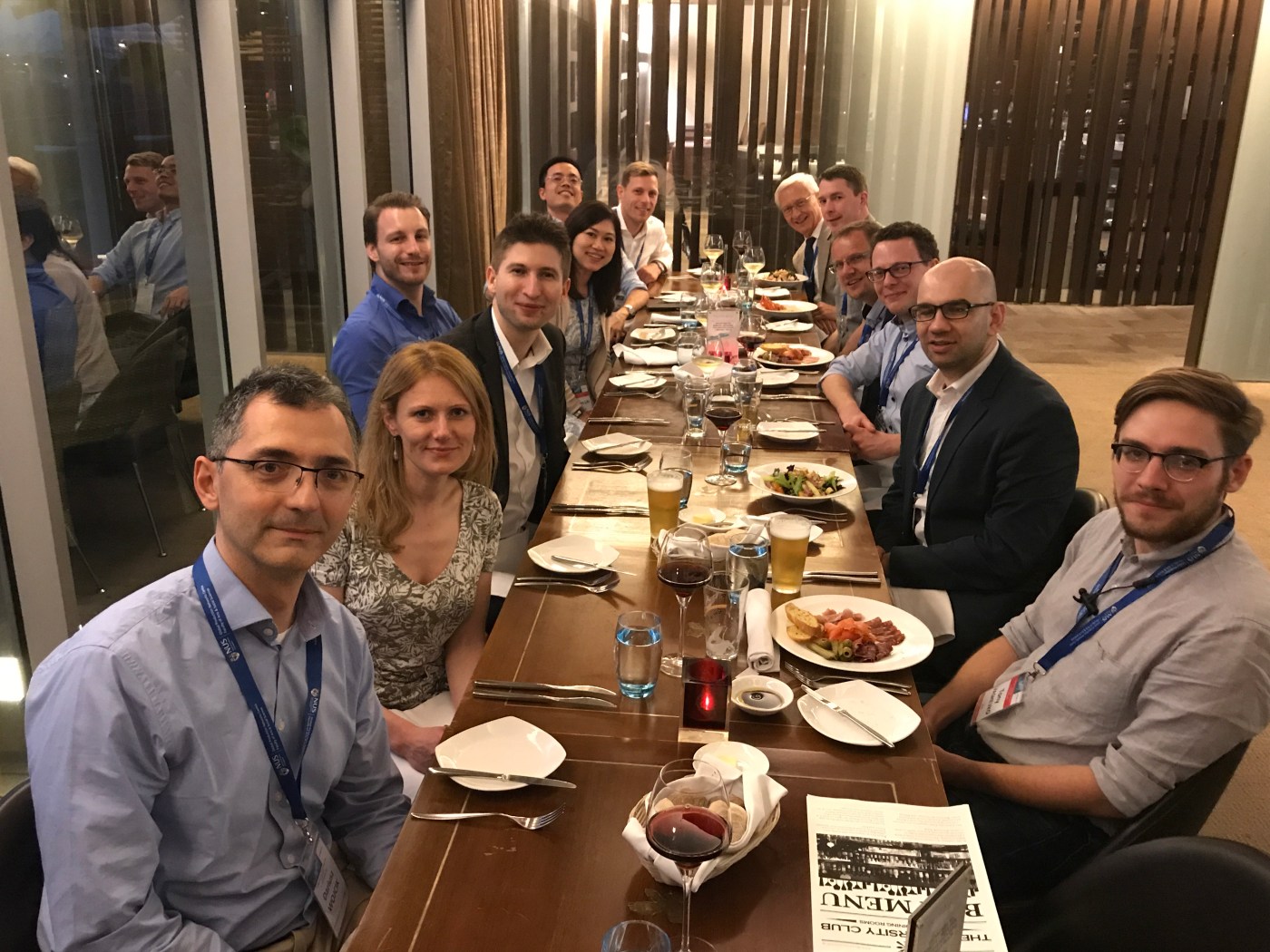
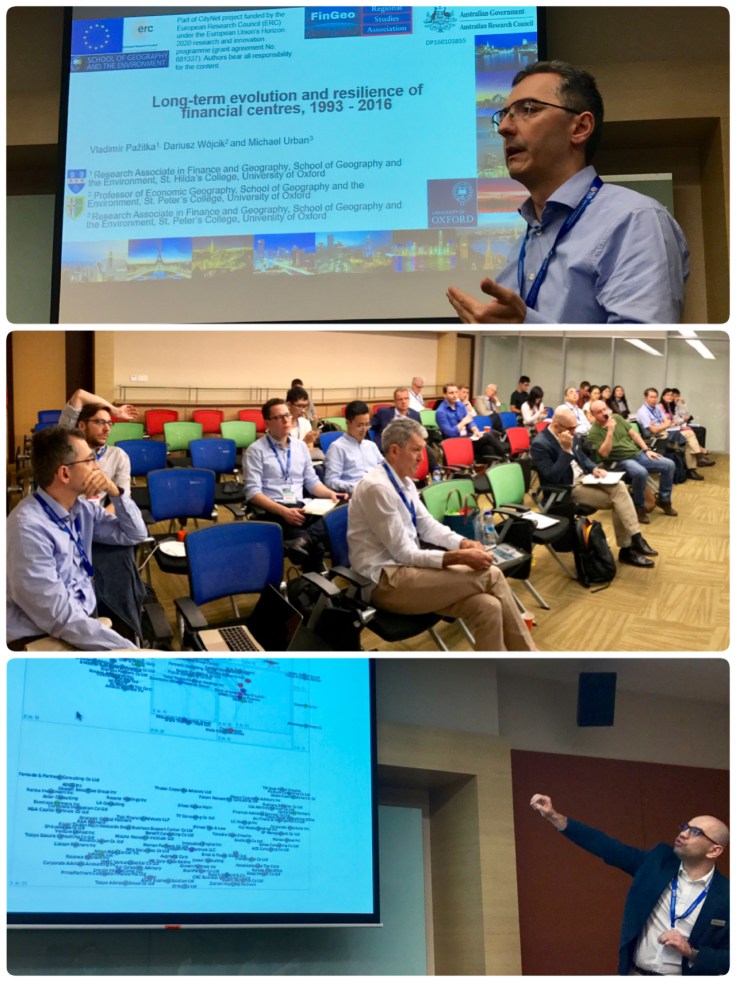
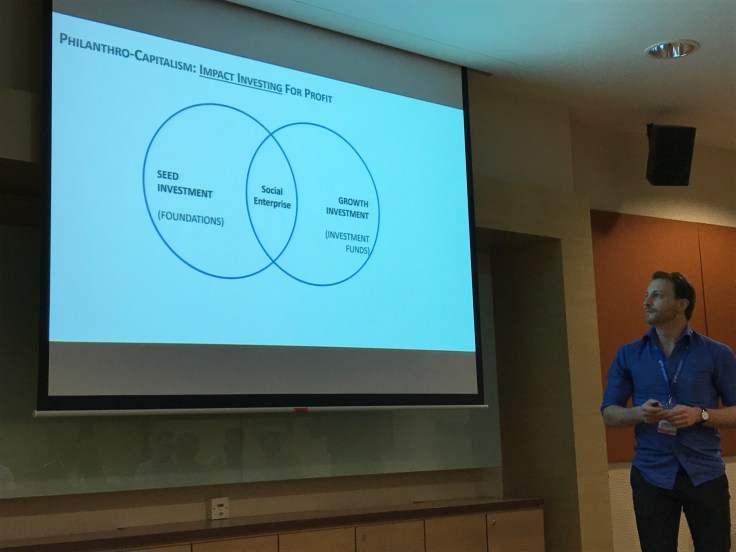
It was a busy week last week with the Conference on Global Production 2017 (CGP2017), organised by GPN@NUS. While I was less involved in the actual conference organisation, I had the 4th FinGeo Global Seminar to host. This was embedded within the overall conference programme, under the theme of ‘Global Financial Networks’. We had a series of three paper sessions on the first day, of the conference, with 11 papers covering topics of world cities networks and international financial centres, markets and actors, and intersections with wider production networks. I had two co-authored papers on ‘Organisational identity, financial networks, and regional diversity’ (with Kurtulus Gemici and Tony Vashevko, from GPN Centre research) and ‘Philanthro-Capitalism, social enterprises, and global development’ (with my PhD student, Dennis Stolz).
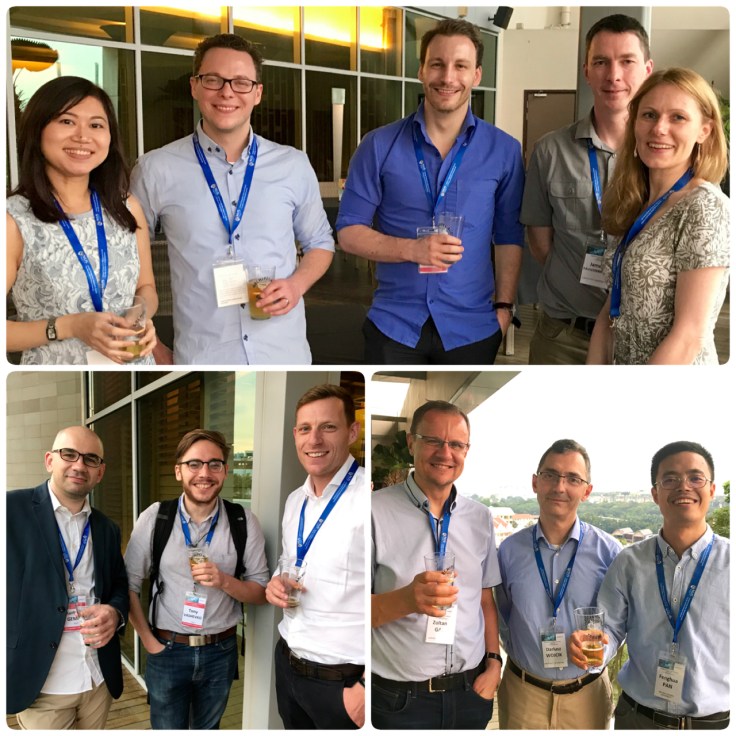
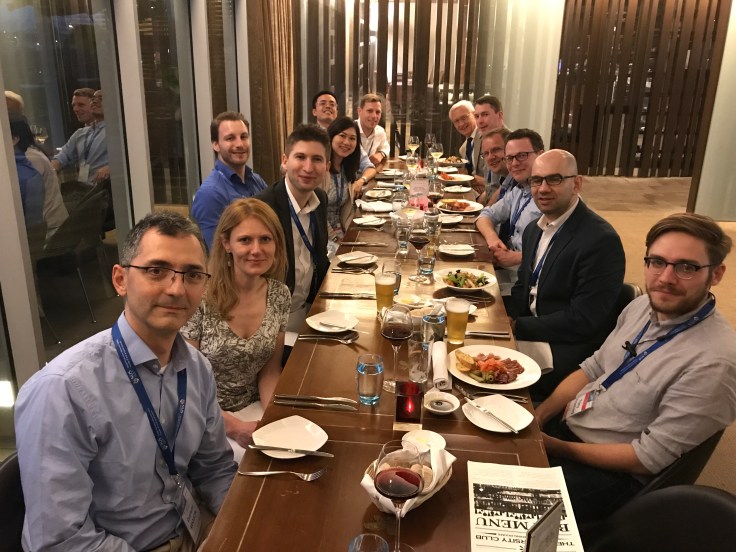
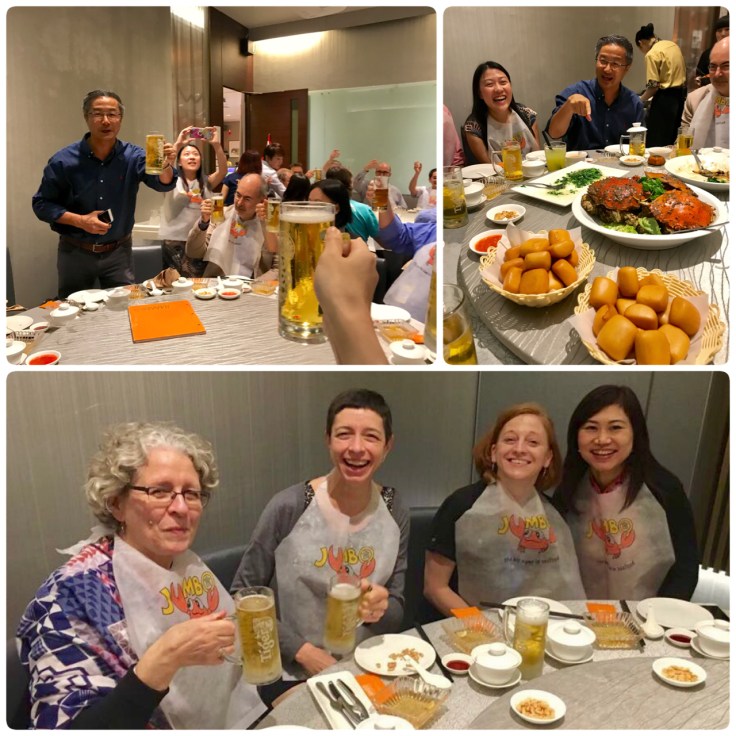
There was more time to chat informally over drinks and dinner at the end of that day. A good gathering of scholars at different career stages and across different parts of the world.
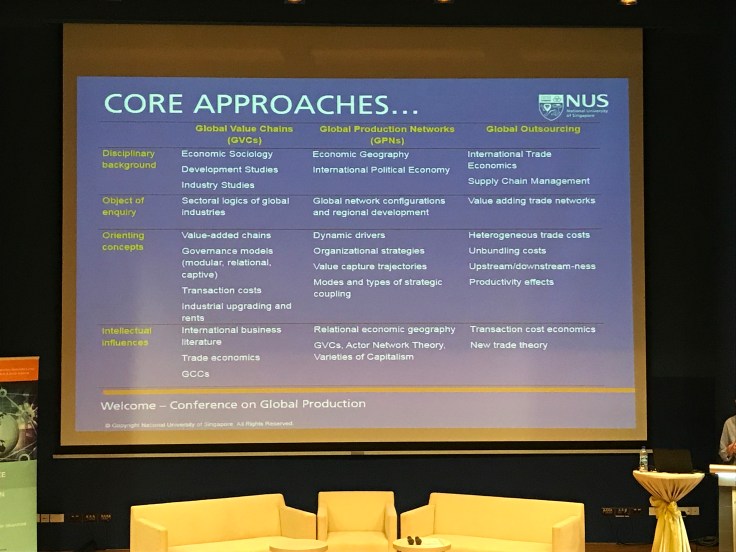
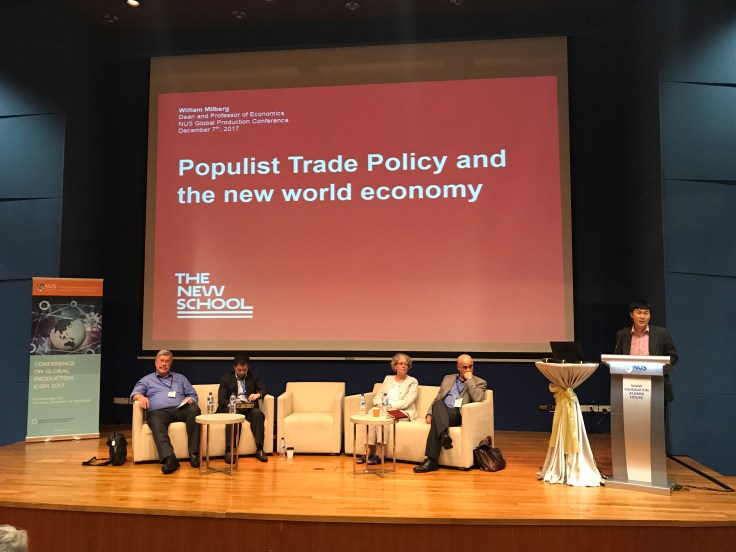
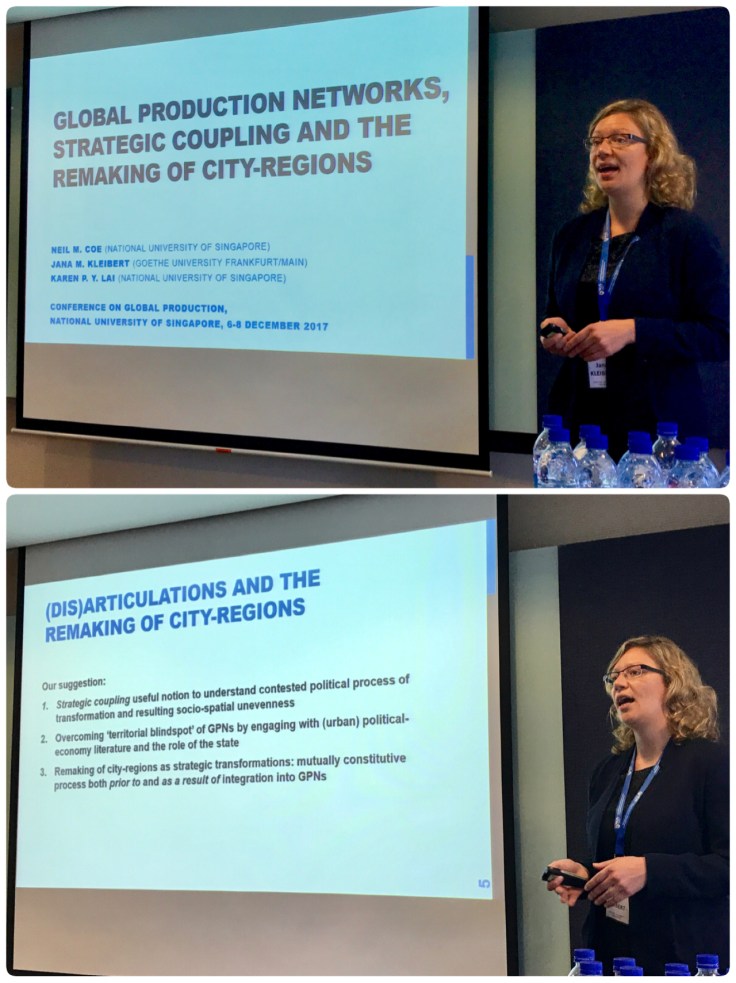
The broader CGP2017 was also very enjoyable, with about 200 participants gathered to share insights and findings on various aspects of global production and issues relating to development, labour, policy, industry sectors and theoretical approaches. It was particularly good to see the mix of scholars from global production networks (GPN), global value chains (GVC) and global outsourcing traditions. Jana Kleibert presented our co-authored paper (with Neil Coe) on ‘GPNs, strategic coupling and the remaking of city-regions’, which called for a more territorial focus in GPN approach. Plenty of useful comments/suggestions from the audience, which we will be using to refine the paper further. Interestingly, finance was highlighted a number of times in plenaries and paper discussions but not substantively investigated. Certainly plenty of scope for financial geography work! Very stimulating plenaries on themes of state of the art, policy, and future gazing. Here’s hoping that there will be another CGP in the not-too-distant future.
 Karen P.Y. Lai